

A probation period is a set stretch, commonly a few months, where an employer checks whether a new hire is right for the job. It is a contract term, not a rule in the Fair Work Act, which means the real legal trigger for unfair dismissal rights is the minimum employment period: six months for larger employers, twelve months for small businesses. Whatever the contract says about probation, that separate timeline is what actually decides an employee’s dismissal rights.
TL;DR:
- Probation periods are contractual and can vary but do not alter the minimum employment period needed for unfair dismissal rights, which is six months for large employers and twelve months for small businesses.
- All employees retain their full rights under the National Employment Standards from day one, including pay, leave accrual, superannuation, and protection from unlawful dismissal, regardless of probation status.
- Employers must follow proper procedures for termination, including providing written reasons, correct notice or payment in lieu, and finalizing entitlements, even if dismissing during probation.
- Active management of the probationary period with clear performance criteria and regular feedback is crucial; extensions must be genuine and not used to delay unfair dismissal eligibility.
- Employers can use fixed-fee recruitment services to improve hiring quality and reduce probation failure risks by securing better fit upfront and providing safer fallback options if the placement does not work out.
Table of Contents
- What is a probation period and why do employers use it?
- How long is a probation period in Australia?
- What are employees entitled to during probation?
- Notice, termination and unfair dismissal during probation
- How should employers manage a probation period?
- What should employees do during their probation period?
- A publisher’s perspective on probation and hiring quality
- How a fixed-fee recruitment model reduces probation risk
- Sources
- FAQ
What is a probation period and why do employers use it?
Probation is a contractual arrangement, not a term defined in the Fair Work Act. Employers set the length and conditions themselves, then write them into the employment contract or letter of offer. An enterprise agreement or award can sometimes impose its own requirements, so it pays to check the relevant instrument before assuming a standard clause will do.
The practical purpose is straightforward. Businesses want a structured window to confirm a new employee can actually do the job they were hired for, not just interview well for it. It also gives both sides a formal opportunity to assess fit, work style, and whether expectations match reality.
Done properly, a probation period achieves three things:
- Confirms the employee has the skills and capability the role demands
- Gives the employer a structured basis for feedback, correction, or confirmation
- Sets a clear framework for onboarding, so new starters know what “success” looks like early
None of this is optional window dressing. A contract that skips over probation terms entirely leaves both parties guessing about expectations and process.
How long is a probation period in Australia?
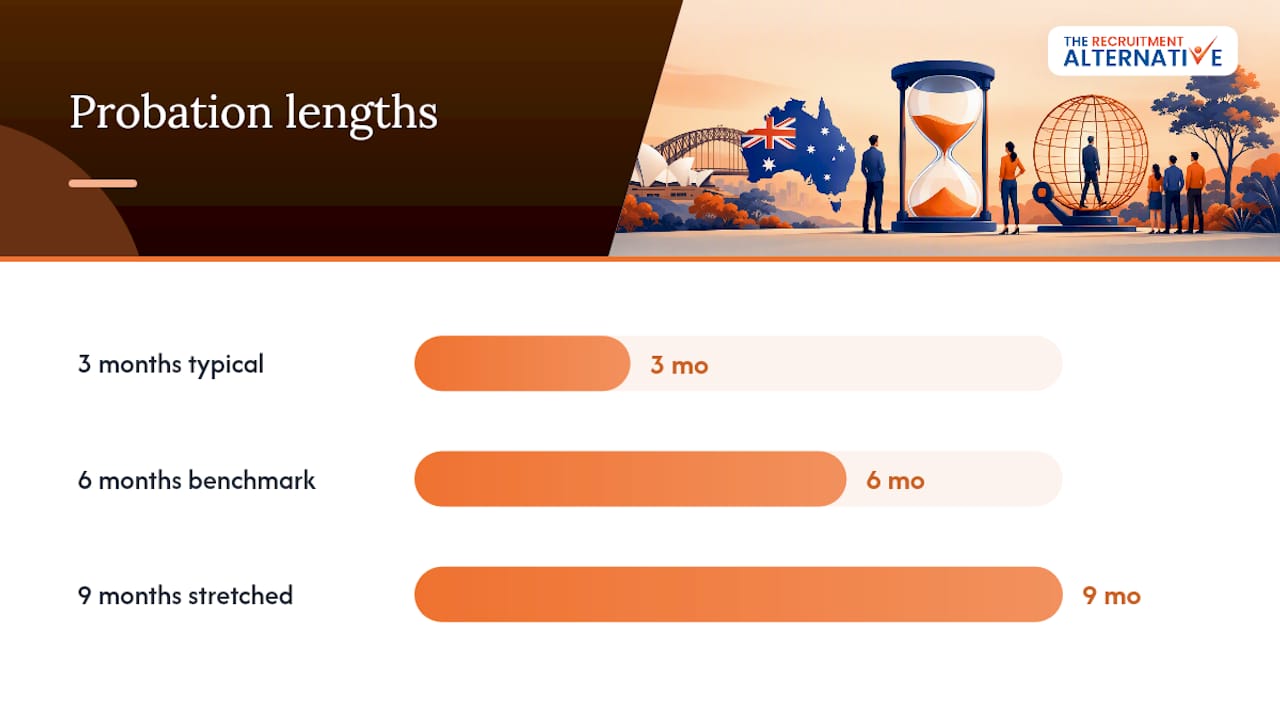
Most Australian employers set probation at a period typically ranging from a few months, with the shorter end used for straightforward roles and the longer end for positions that need real ramp-up time, technical training, or a chance to prove performance against sales or output targets. There is no legislative minimum or maximum for probation itself, so this is a matter of employer policy and contract drafting rather than law.
The number that actually matters legally is different. The minimum employment period determines when an employee becomes eligible to bring an unfair dismissal claim:
- Six months for employers with 15 or more employees
- Twelve months for small businesses with fewer than 15 employees
The gap that catches employers out: setting a three-month probation clause does not shorten the minimum employment period, and extending probation to nine months does not lengthen it either. An employee at a large business gains unfair dismissal protection at the six-month mark regardless of what the contract calls “probation.”
This distinction trips up a lot of employers who assume probation and legal protection run on the same clock. They do not. Always check the applicable award or enterprise agreement too, since some set their own probation-related conditions that sit alongside the NES minimum employment period.
What are employees entitled to during probation?
Being on probation does not put an employee’s basic rights on hold. From the very first day of a permanent role, the National Employment Standards apply in full, regardless of whether the person is still inside a probation clause.
That means four things kick in immediately:
- Full award or agreement pay for every hour worked, calculated the same way it would be after probation ends
- Annual leave and personal/carer’s leave accrual for permanent employees, building up from day one even though it may not be usable until a qualifying period passes
- Superannuation contributions, paid at the standard rate with no probationary carve-out
- Protection from unlawful dismissal and adverse action, which apply from the first day of employment, not after probation is served
Casual employees sit slightly differently. Instead of accruing paid leave, they receive casual loading in lieu of those entitlements, but minimum pay rates and superannuation obligations still apply in full.
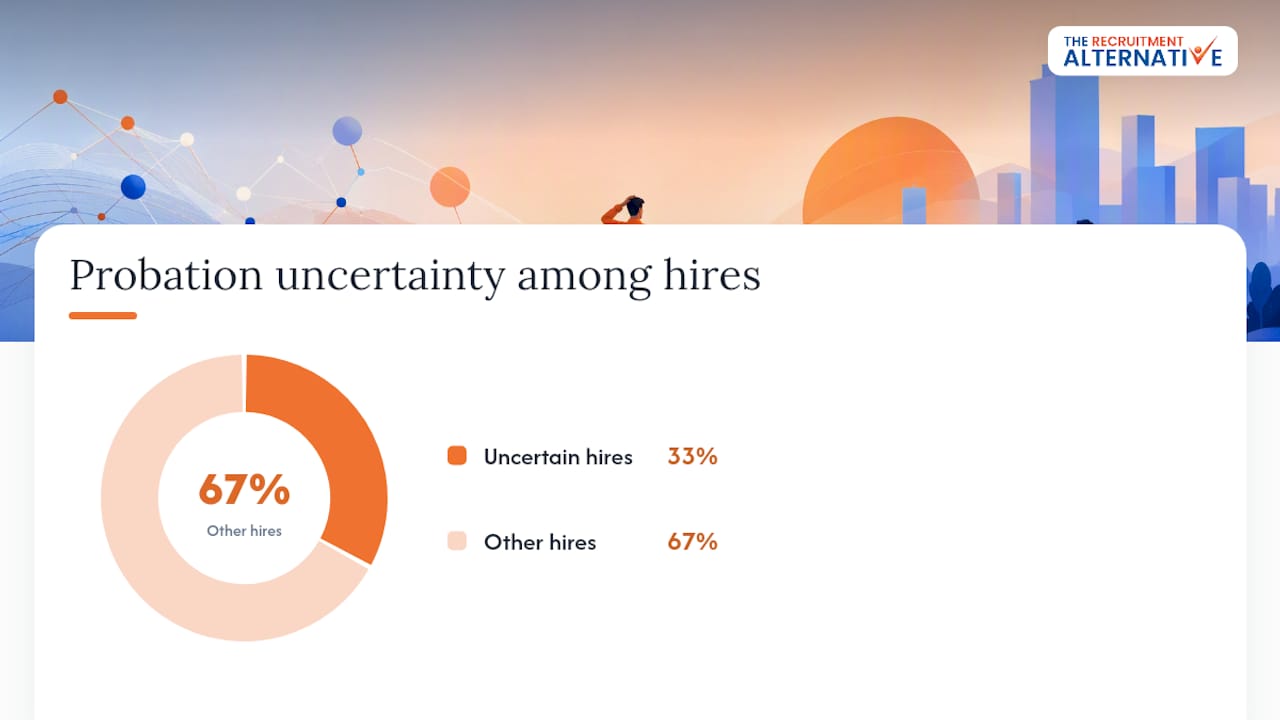
One in three new hires face uncertainty about what they’re actually owed during a trial period simply because probation clauses often leave entitlements unstated, when in practice the NES fills that gap automatically. No contract can override these baseline protections, even during a probationary stretch.
Notice, termination and unfair dismissal during probation
Ending employment during probation still has to follow the rules. The NES sets minimum notice periods based on length of service, and employers can choose to pay in lieu of working out that notice rather than requiring the person to stay on.
A lawful, defensible termination during probation generally follows this sequence:
- Document the specific reasons for ending employment, tied to performance or conduct rather than vague dissatisfaction
- Provide the correct notice period or payment in lieu, calculated against actual length of service
- Finalise all entitlements, including payment for any accrued but unused annual leave
- Communicate the decision in writing, with a clear date of effect
General protections against dismissal for prohibited reasons, such as discrimination, exercising a workplace right, or taking parental leave, apply from an employee’s very first day, regardless of probation status. Unfair dismissal claims are a separate matter again: those only become available once the employee passes the minimum employment period, so an employee terminated in month four at a large employer generally cannot bring an unfair dismissal claim, though general protections claims remain open regardless.
Pro Tip: Never assume a probation clause gives you a free pass to dismiss without process. Document performance conversations from week one, not just when things start going wrong. A paper trail is your best protection if a decision is ever challenged.
How should employers manage a probation period?
A probation period only works as a genuine assessment tool if it is actively managed, not just left running in the background until month three or six arrives. The APSC’s guidance for the public service sets a useful benchmark here: clear procedures, defined timeframes, and regular feedback throughout, not just a pass or fail moment at the end.
A defensible process typically looks like this:
- Set clear, written performance criteria in the first week, so the employee knows exactly what “meeting expectations” means
- Schedule regular check-ins, ideally fortnightly or monthly, rather than one review at the very end
- Keep contemporaneous notes of feedback given and any evidence of underperformance as it happens, not reconstructed afterwards
- If extension is genuinely needed, agree it mutually and confirm it in writing as a signed addendum to the contract
- Communicate the final outcome, confirmation, extension, or termination, in writing with reasons
Extensions are legitimate when performance genuinely needs more time to assess. What is not legitimate is using an extension purely to delay an employee’s unfair dismissal eligibility. Stretching probation to nine months at a large employer does not shift that six-month minimum employment period clock.
Pro Tip: If you are unsure how to structure ongoing feedback conversations, a practical guide to giving continuous feedback can help managers build the habit of regular, low-pressure check-ins rather than saving everything for a single confronting review.
What should employees do during their probation period?
Employees have more agency during probation than most realise. Ask directly for the KPIs or success measures your manager will use to judge the role, rather than guessing at what “doing well” looks like.
A few habits make a real difference:
- Request feedback on a regular cadence, not just when something goes wrong
- Keep your own written record of achievements, completed projects, and any positive feedback received
- If told you have failed probation, ask for specific examples and a written record of the decision rather than accepting a vague explanation
- Check your final pay includes notice (or payment in lieu) and payout of any accrued, unused annual leave
- If you suspect the real reason was discriminatory or connected to exercising a workplace right, seek advice on a general protections claim, since that avenue does not require serving the minimum employment period
Career advice from SEEK consistently points to the same pattern: employees who ask for clarity early tend to have a smoother path to confirmation than those who wait and hope.
A publisher’s perspective on probation and hiring quality
Most probation failures trace back to a hiring decision, not a performance problem. Some recruitment agencies use a fixed-fee model with a rigorous front-end process, proper screening, and realistic job previews to reduce the odds of a probation period ending in disappointment for either side. For employers wanting more detail on structuring notice periods or building a genuinely useful onboarding process, that groundwork matters more than any probation clause ever will.
— Josh Townsend
How a fixed-fee recruitment model reduces probation risk
Some recruitment agencies give Australian employers a fixed-fee way to avoid the guessing game that turns probation into a fallback safety net instead of a formality. Rather than paying a traditional agency a percentage of salary, the cost is known upfront across various roles including sales, administration, finance, engineering, healthcare, technology, trades, and executive positions.

The Recruit and Recruit+ services are built around a proper sourcing and screening process designed to get the fit right the first time, rather than leaving that job to a three-month trial. If a placement genuinely does not work out inside the early months, the Replacement Campaign offers employers a safety net rather than starting the whole search from scratch. If you are hiring permanent staff and want to reduce the chance of a difficult probation conversation down the track, visit The Recruitment Alternative to see how the fixed-fee model applies to your next role.
This article is general information, not a substitute for advice from a qualified lawyer. Consult a qualified legal professional about your own circumstances before acting on anything here.
Sources
- Probation — Fair Work Ombudsman
- What is the minimum employment period — Fair Work Commission
- Understanding probationary periods — Australian Public Service Commission (APSC)
FAQ
Can I be fired during the probation period?
Yes, an employer can end employment during probation, provided they give the correct notice or payment in lieu and the reason is not unlawful. General protections against discriminatory or retaliatory dismissal apply from day one, regardless of probation status.
Can I resign during my probation period?
Yes, employees can resign during probation, though the employment contract usually specifies a shorter notice period that applies during this time. Check your contract for the exact notice requirement, as it often differs from standard post-probation notice.
Is it true that probation is always six months in Australia?
No, there is no set length for probation under Australian law. Common practice runs from three to six months depending on role complexity, but employers set the exact duration in the contract.
Can an employer terminate someone during a probation period without warning?
An employer can end employment quickly during probation, but must still provide the correct notice or pay in lieu and document a lawful reason. Unfair dismissal protection only applies once an employee passes the minimum employment period of six or twelve months, so most probation dismissals fall outside that particular claim, though general protections still apply.

